


Bringing your baby
Pre-crawling babies are welcome. We can pause for feeding, changing or settling during your appointment.
Here’s how to book, what to bring and what happens at your first physiotherapy appointment.
Book an appointment
 HCPC Registered
 One-to-onePre-crawling

Choose a time and send your booking request. Your appointment is confirmed once Garance accepts it.

Your confirmation includes a secure Customer Hub link. Complete your intake there before your appointment.
Choose something you can move in, and bring any relevant letters, scan reports and questions.
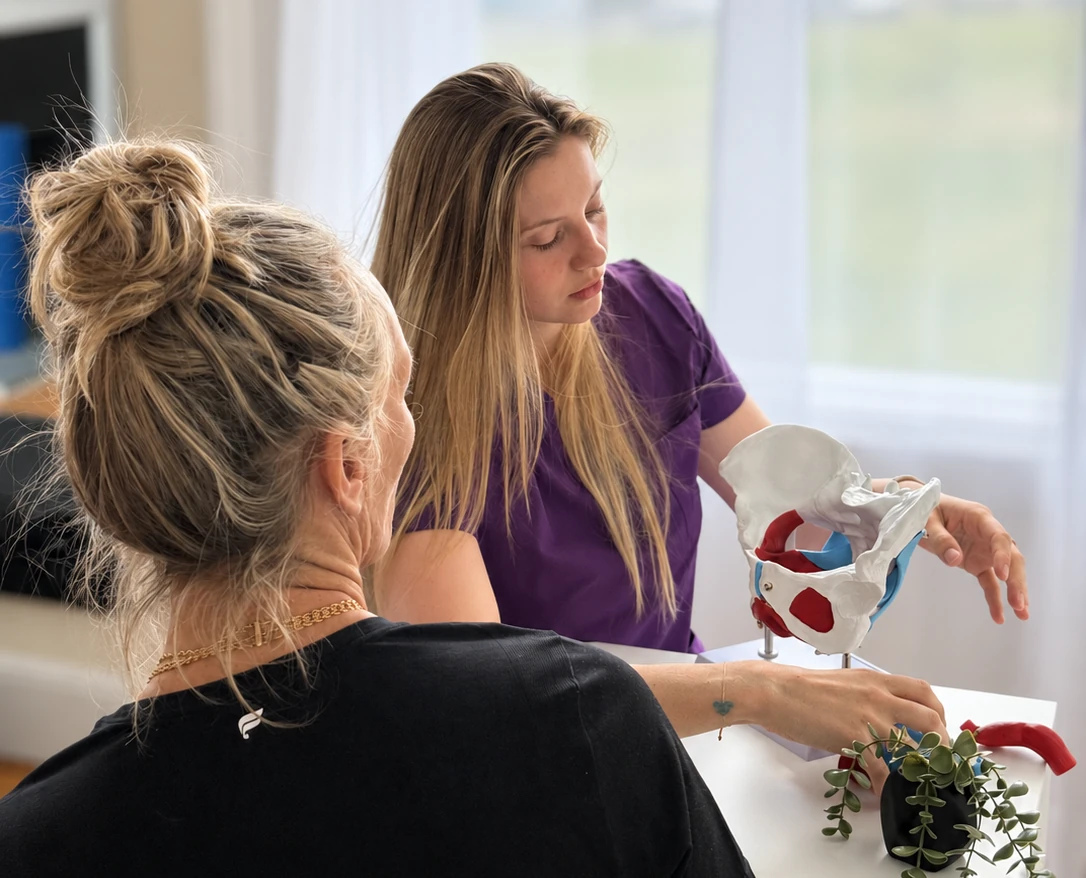
Your first appointment lasts 60 minutes in person or 45 minutes by video. We’ll discuss your symptoms, assess what’s relevant to you and agree a plan for treatment.
This may include hands-on treatment, exercise or advice you can use at home. Any internal pelvic floor assessment is discussed first and only happens with your consent.
You’re welcome to ask questions, pause or stop at any point.
Pre-crawling babies are welcome. We can pause for feeding, changing or settling during your appointment.

The clinic is in Brunswick, Hove, on the second floor with stair access. Please get in touch before booking if stairs may be difficult.
 5.0 out of 5
“As a mum too, I felt like she really understood what I was saying and the exercises she gave me to take away were manageable in the hectic baby life!”
 Maria M.Practical support
“She explained things very clearly, and I left feeling empowered with exercises and understanding to support my rehab post-birth.”
 Isabel C.Postnatal care

If you are new to Coastly, start with an Initial Physiotherapy Assessment. This is the right first step whether you need help with pregnancy, postnatal recovery, pelvic health, pain, scar recovery, movement, strength or return to exercise.
Your first appointment is 60 minutes in person or 45 minutes by video. We talk through your symptoms, health history, daily life and goals, then assess what is relevant to you. That might include movement, strength, posture, core function, scar tissue, pelvic health symptoms, pain or return to exercise.
It can be, where it is useful and appropriate. Some appointments include hands-on treatment, massage, soft tissue work or scar support. Others are more focused on assessment, movement, rehab, strength or advice. It depends on what you need and what feels comfortable.
Wear comfortable clothing you can move in. Bring any relevant letters, scan reports, notes or questions you would like to talk through. You do not need anything special, and the appointment can be adapted around what you feel comfortable with.
That is really common. Many women feel nervous talking about leaking, heaviness, pain, scars, sex, birth recovery or changes in their body. Appointments are private, 1:1 and paced around you. You can ask questions, pause, or say if something feels uncomfortable.
Not necessarily. If an internal assessment may be helpful, this will be discussed with you and only carried out with your consent. Many concerns can also be assessed and treated through discussion, movement assessment, breathing, strength work, pelvic health advice and rehabilitation planning.
Definitely. It does not have to be recent to matter. Postnatal pain, pelvic floor symptoms, scar tightness, abdominal weakness and exercise uncertainty can still be supported months or years after birth.
Not at all. You do not need to be fit, strong or already doing exercise. Physiotherapy starts from where you are now. The aim is to help you understand your body, build confidence and move forward safely.
Physiotherapy is more assessment-led. It looks at your symptoms, movement, strength and goals, then builds a plan for treatment, rehab or recovery. Women’s Massage & Soft Tissue Therapy is more hands-on and is best for tension, aches, recovery, scar comfort and general wellbeing.
This depends on your symptoms, goals and how your body responds. Some women only need one appointment. Others choose follow-ups to progress treatment, rehab, exercises or strength work. We will talk through what feels realistic, and there is no pressure to continue.
 Book your