
START HERE
Initial Physiotherapy Assessment
A full first appointment to understand your symptoms, history, movement and goals, and agree a clear plan from there.
£6060 minsBook initial assessment
Physiotherapy support for pregnancy-related pelvic pain, pubic pain, hip pain and discomfort with walking, stairs or turning in bed.
Pelvic girdle pain can make everyday movement feel harder than it should, especially during pregnancy or after birth. Physiotherapy can help you understand what is contributing to your pain and build a practical plan for movement, comfort and strength.
Pelvic girdle pain is pain around the pelvis, hips, pubic bone, lower back or sacroiliac joints. It is common during pregnancy, but it can also continue after birth if your body has not had the right support to recover.
You might notice pain with walking, stairs, rolling in bed, standing on one leg, getting dressed, lifting, turning or getting in and out of the car. Physiotherapy looks at how your body is moving, what is irritating the symptoms, and what can be changed to make daily life feel more manageable.
Pain, pressure or sharp discomfort at the front of the pelvis or around the pubic bone.
Aching, stiffness or pain around the lower back, hips, pelvis, buttocks or sacroiliac joints.
Clicking, catching or feeling uneven through the pelvis when walking, turning or changing position.
Pain that gets worse with walking, stairs, standing for longer, turning in bed or getting in and out of the car.
Pain when dressing, putting on trousers, stepping into shoes, getting into the bath or balancing on one leg.
A dragging, heavy or pressured feeling through the pelvis, especially after standing, walking or busy days.
A full first appointment to understand your symptoms, history, movement and goals, and agree a clear plan from there.
60 mins
A full first appointment to understand your symptoms, history, movement and goals.
45 minutes
A focused session to support MSK and pelvic pain relief and clear next steps.
Book NowSave £25
5 x 45 mins
Five follow-up appointments for ongoing support, rehab and longer-term progress.
Pelvic girdle pain can happen as your body adapts to pregnancy. Changes in posture, strength, load, hormones, walking patterns and previous aches or injuries can all play a part. Physiotherapy helps make sense of what is aggravating your symptoms and what can be changed to make daily life feel more manageable.
For some women, symptoms settle after birth. For others, pain can continue because the body is still recovering and there is suddenly a lot of lifting, carrying, feeding and broken sleep. If symptoms are still there, it is worth getting support rather than waiting and hoping it disappears.
Often, movement can still be part of the plan, but it may need adapting. We can look at what your body tolerates, what tends to flare symptoms, and how to keep you moving without making things feel worse.
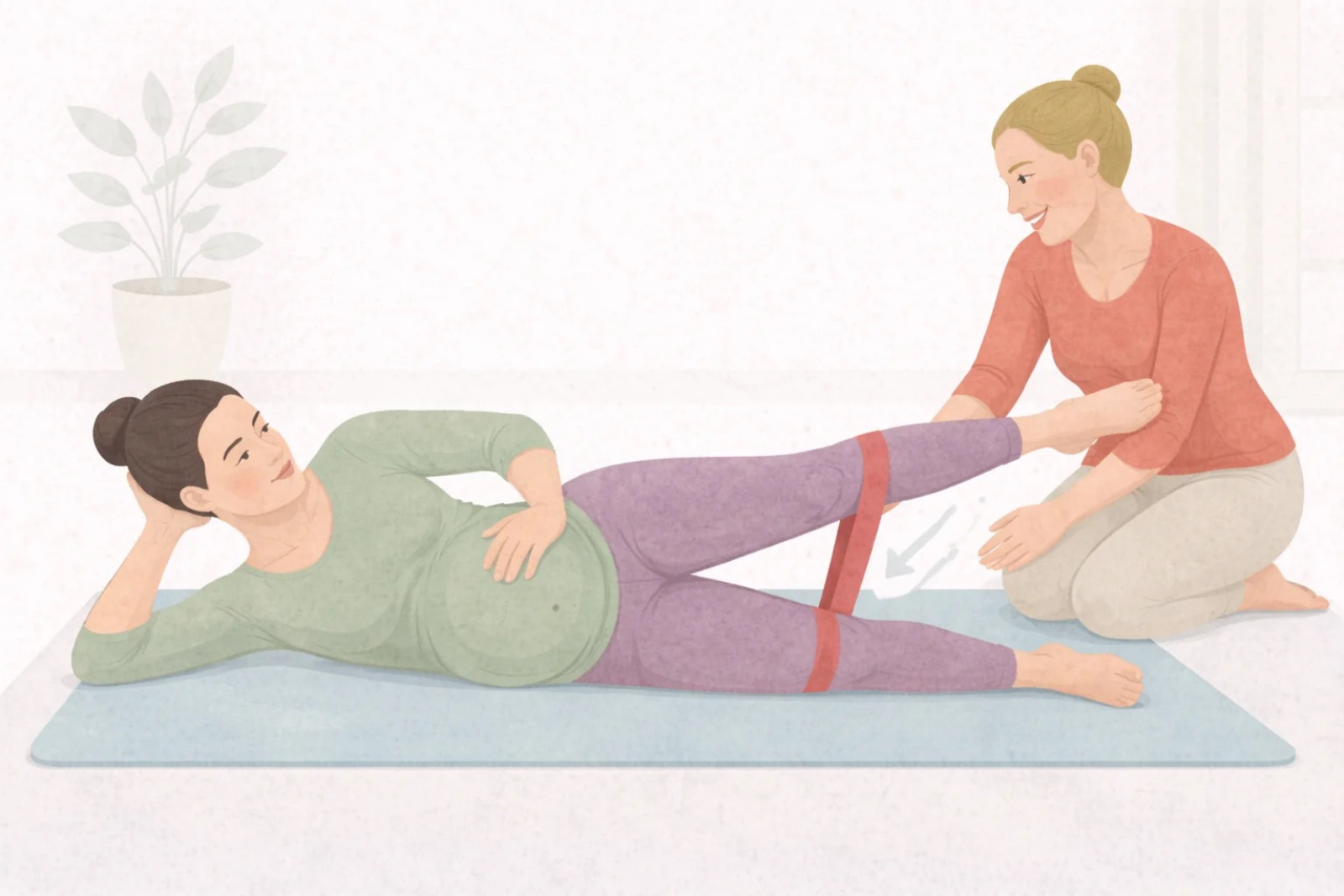
Pregnancy physiotherapy is adapted around your stage of pregnancy, symptoms and comfort. The appointment may include talking things through, movement assessment, gentle treatment, exercise advice and practical ways to make walking, stairs, sleep and daily movement easier.
If you are new to Coastly, the Initial Physiotherapy Assessment is the best first step. It gives enough time to understand your symptoms, pregnancy stage, movement and goals. After that, any follow-up support can continue as Pregnancy Physiotherapy if needed.
You do not have to put up with pelvic pain. Let's work together to find comfort and movement that feels right for you.