
START HERE
Initial Physiotherapy Assessment
A full first appointment to understand your symptoms, history, movement and goals, and agree a clear plan from there.
£6060 minsBook initial assessment
Physiotherapy support for abdominal separation, coning, core control, strength and confidence after pregnancy or birth.
Abdominal separation is common after pregnancy, but it can feel confusing when you are not sure what exercises are safe or why your tummy still feels weak. Physiotherapy can help you understand what is happening and rebuild strength in a way that feels realistic for your body.
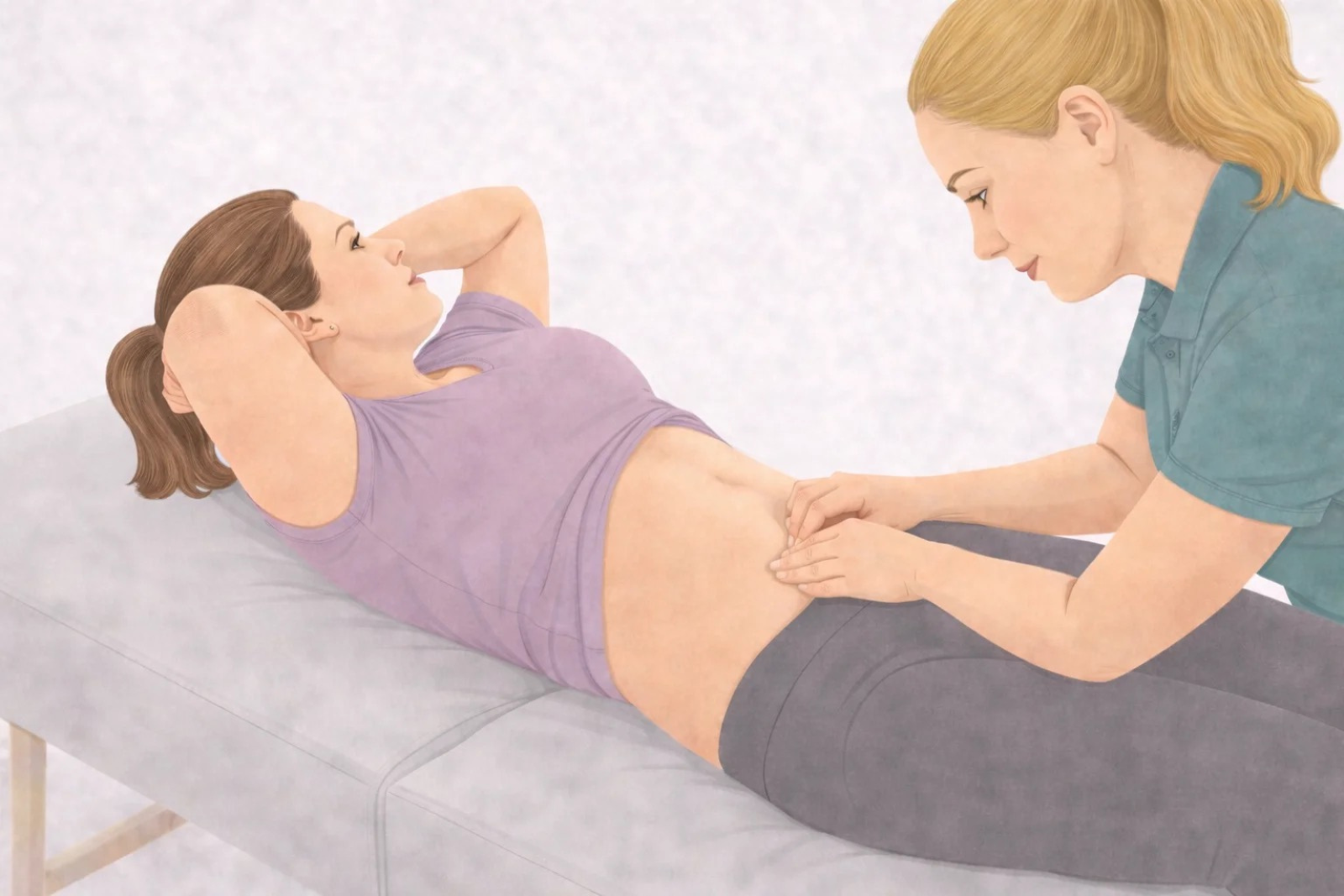
Abdominal separation, also called diastasis recti, is where the connective tissue between the abdominal muscles stretches during pregnancy. For some women, the area still feels soft, weak, domed or difficult to control after birth.
The aim is not just to “close the gap”. What matters is how your core manages pressure, movement, lifting, exercise and daily life. Physiotherapy can help you build better control, strength and confidence without guessing what you should or should not do.
Noticing a ridge, bulge or cone shape through the middle of your tummy during movement or exercise.
Feeling unsupported, weak or unsure when lifting your baby, toddler, car seat, pram or shopping bags.
Feeling like your core does not switch on properly during daily movement, exercise or getting up from lying down.
Back, hip or pelvic discomfort that may be linked to reduced core support, lifting demands or return to exercise.
Feeling a gap, softness or lack of tension through the centre of your tummy.
Not knowing which core exercises are safe, what to avoid, or how to progress without making symptoms worse.
A full first appointment to understand your symptoms, history, movement and goals, and agree a clear plan from there.
60 mins
A full first appointment to understand your symptoms, history, movement and goals.
45 minutes
A focused session to support postnatal recovery and clear next steps.
Book NowSave £25
5 x 45 mins
Five follow-up appointments for ongoing support, rehab and longer-term progress.
It is still worth getting support, even if you are months or years postnatal. The focus is not only the size of the gap, but how your core manages pressure, lifting, movement and exercise. There is often a lot that can be improved with the right plan.
Pre-crawling babies are welcome at the home clinic. The appointment can pause for feeding, changing or settling, so you do not need to worry if your baby needs you during the session.
Not always. A smaller gap can be helpful, but function matters more than the number alone. We look at how your tummy manages pressure, whether you notice doming or coning, how supported you feel, and how your core works during daily life and exercise.
Not usually for abdominal separation alone. Assessment often focuses on your abdominal wall, breathing, movement, posture, strength and how your body manages pressure. If pelvic health symptoms are also involved, Garance will explain your options clearly and nothing is done without your consent.
You can ask for advice early, but the right starting point depends on your birth, healing, symptoms and energy levels. Early support can be gentle and practical, then strength work can build gradually as your body is ready.
You do not have to put up with pelvic pain. Let's work together to find comfort and movement that feels right for you.