
Pelvic Floor Dysfunction
Gentle, non-invasive guidance to help manage pelvic floor concerns, focusing on restoring function, comfort, and confidence through every stage of life.
If you experience leaking when coughing or a feeling of heaviness, sessions focus on practical movement strategies and lifestyle adjustments to improve day-to-day control and comfort.
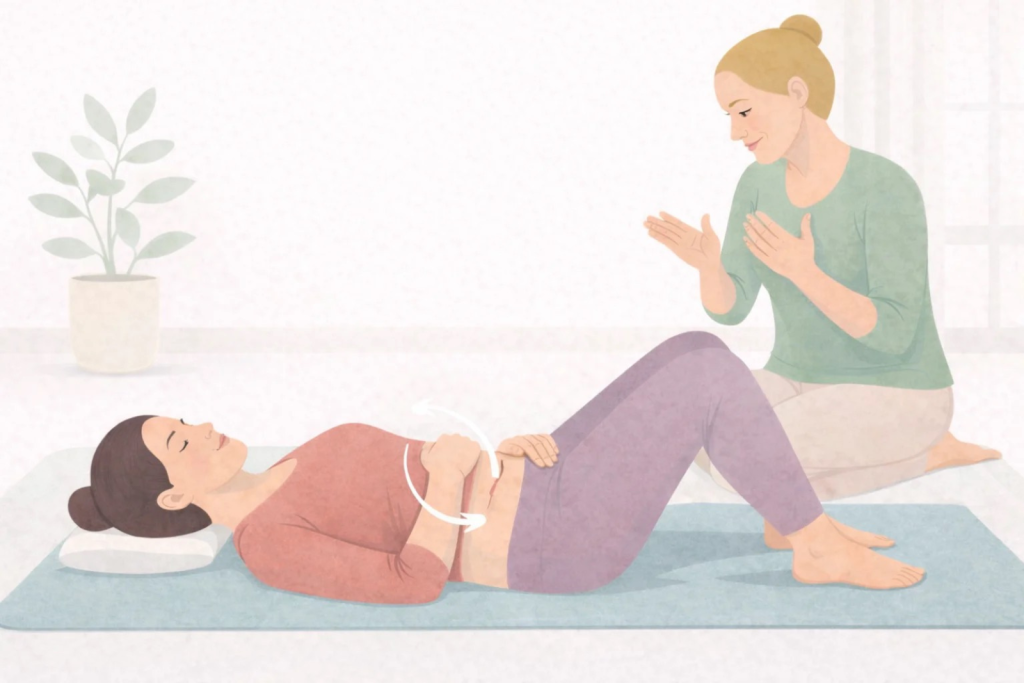
What is Pelvic Floor Dysfunction?
Pelvic floor dysfunction is a broad term used when the group of muscles and tissues that support the pelvic organs do not work as effectively as they should. This can manifest as muscles being too weak, too tight, or simply lacking the coordination required to manage the pressure of daily activities like lifting, running, or even laughing.
Whether it involves bladder weakness, bowel urgency, or the physical sensation of pelvic organ prolapse, the focus is on understanding the body as a whole and restoring coordinated pelvic floor function. Non-invasive techniques help reconnect these muscles so daily movement feels more controlled and comfortable.
Common signs of Pelvic Floor Dysfunction
Activity leaking
Noticing small amounts of urine escape during physical exertion or sudden movements like sneezing or coughing.
Pelvic heaviness
A dragging or full sensation in the pelvis that often feels more noticeable towards the end of a busy day.
Increased urgency
Feeling a sudden, strong need to empty the bladder that is difficult to ignore or delay when out and about.
Exercise hesitation
Avoiding certain movements, sports, or fitness classes due to a lack of trust in pelvic floor control.
Straining discomfort
Experiencing difficulty or a lack of ease when trying to empty the bowels or bladder fully.
Postural fatigue
Finding it difficult to maintain core and pelvic support during long periods of standing or walking.
Clear, simple pricing
Women's Health Initial Assessment
60 minutes
The first step for all new clients to understand your history, symptoms, and goals.
Pelvic Floor Health session
45 minutes
A focused session to support pelvic floor health and clear next steps.
Book NowPelvic Floor Dysfunction FAQs
Is an internal exam required?
No, this practice focuses entirely on external, non-invasive assessment and movement-based guidance. No internal procedures are performed.
Can a baby come to the session?
Absolutely, the practice is baby-friendly, allowing for a focus on recovery without the worry of childcare.
Can movement help with a prolapse?
Yes, while movement may not change the anatomy, it can significantly help manage the symptoms and heaviness by improving how the body handles pressure.
Is this only for postnatal women?
Not at all. Pelvic floor concerns can affect women at any stage of life, including during menopause or even if they have never been pregnant.
How many sessions will I need?
This varies for every individual, but a plan is always agreed upon that feels realistic and manageable for your specific goals and lifestyle.
Related support
Related services
Feel comfortable in your body again
You don't have to live with the worry of leaks or heaviness. Let's work together to rebuild your confidence and trust in your body.