
Abdominal Separation (Diastasis Recti)
Gentle, movement and breath focused guidance to help restore core function and confidence after pregnancy, centering on physical ease and long-term strength.
If you notice a visible midline doming pattern or changed abdominal tension, sessions focus on practical movement strategies to help manage core weakness during daily activities.
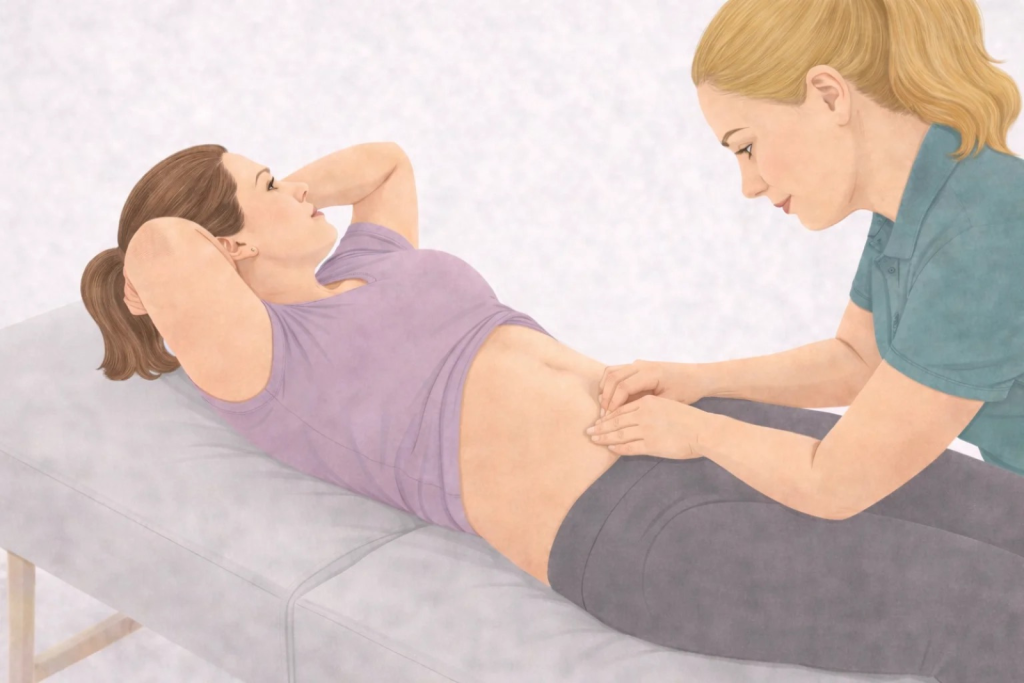
What is Abdominal Separation?
Abdominal separation is a natural stretching of the connective tissue between the stomach muscles to accommodate a growing baby. For some, this tissue remains widened after birth, which can lead to a feeling of instability in the torso or a change in how the abdominal wall looks and functions during movement.
Often referred to as diastasis recti, the focus here is on improving midline tension and function rather than simply "closing the gap." Non-invasive movement education helps the body rebuild support for lifting, carrying, and everyday exercise.
Common signs of Abdominal Separation
Visible doming
Noticing a ridge or protrusion along the midline when moving between sitting and lying down.
Lifting challenges
Feeling a lack of internal support when picking up a child or moving heavy household objects.
Core instability
A sense that the stomach muscles are not engaging effectively during daily movements or exercise.
Lower back strain
Experiencing an ache in the lower back due to the core muscles not providing sufficient support.
Midline softness
Feeling a distinct gap or a lack of tension in the tissue between the abdominal panels.
Reduced stamina
Finding that core fatigue sets in quickly during physical tasks or while maintaining upright posture.
Clear, simple pricing
Women's Health Initial Assessment
60 minutes
The first step for all new clients to understand your history, symptoms, and goals.
Postnatal Recovery Support
45 minutes
A focused session to support postnatal recovery and clear next steps.
Book NowAbdominal Separation FAQs
Is it ever too late to address abdominal separation?
No, the body is capable of change long after giving birth. Support is effective whether you are months or years into your postnatal journey.
Can a baby come to the session?
Absolutely, the practice is baby-friendly, allowing for a focus on recovery without the worry of childcare.
Does the gap have to close completely?
Not directly. It can take several weeks or months for the gap and its strength to be restored.
Is this an internal assessment?
No, no internal or invasive procedures are performed. The focus is entirely on external movement and core support.
How soon can I start after birth?
Guidance can be provided as soon as you feel ready for gentle movement, usually following the initial six-week check, though plans can still be tailored at any stage.
Related support
Related services
Feel comfortable in your body again
You do not have to put up with pelvic pain. Let's work together to find comfort and movement that feels right for you.